The internet has eaten itself
On habit, AI and the art of experiencing what we have stopped seeing
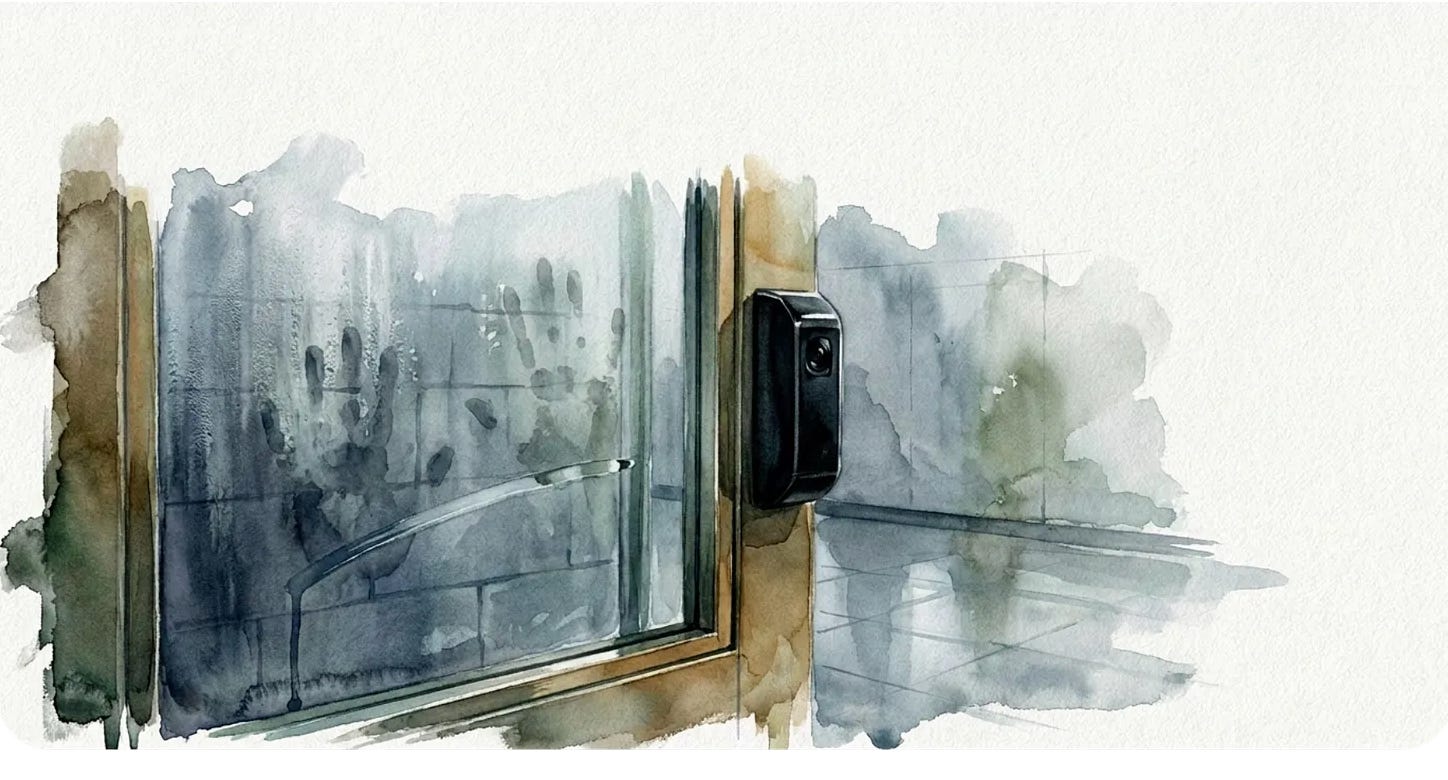
I am living temporarily by Fridhemsplan. Around the corner, I passed a studio. In the display window is a quote, written directly onto the glass pane.
Viktor Shklovsky, Russian literary theorist, 1917:
“The automatism of habit consumes work, clothing, furniture, the wife, and the fear of war. If whole complex lives are lived unconsciously, it is as if they had never been.”
I was surprised to see the words here. It took me back to my studies in Lund.
Shklovsky is not particularly well-known outside of literary studies circles, which is strange because he describes something so fundamental that one wonders how people on Sankt Eriksgatan manage without him. They probably do not manage.
His thesis is simple: we stop seeing what we see too often. The automatism of habit replaces experience with recognition. We see the silhouette, not the object. And when we stop seeing—in a sense, we stop living what we are living.
Or perhaps that is why they live at Fridhemsplan. To escape the expected. But even Fridhemsplan disappears after a few weeks.
The task of art, Shklovsky argued, is to break that automatism. To make the familiar strange. To prolong perception so that we are forced to be present. He called it ostranenie – defamiliarisation. To make the stone stony again.
I thought about the internet as I stood there by the shop window. I think more and more about the internet.
Let me try to see it for the first time.
I write to an AI agent: book a meeting with Estelle on Thursday. Within seconds it is done. Calendar updated, invitation sent.
But what actually happened in that moment?
Something disappeared. Not the meeting – it is in the calendar now. What disappeared was the space where I used to exist: opening the calendar, seeing that Thursday looks a certain way this week, noticing that I am tired and perhaps should decline.
The check-in with myself that never happened.
Better this way. Perhaps.
The internet has always been moving in that direction.
Web 1 was something we actually watched. Strange, incomprehensible, required initiative. One would surf – with the feeling of moving through something unknown.
Web 2 made it smoother. Algorithms learned what we wanted before we knew it ourselves. We started using the internet without being present anymore. Like Shklovsky's sofa being dusted without anyone remembering it.
Web 3 promised to give power back to the user. It became a casino for digital assets. A new kind of invisibility. Most people, including me, stood on the outside.
And now Web 4. AI that interprets my intentions, acts in my name. So powerful that I and many others have lost sleep. Creators and coders move mountains without friction.
The smooth kills the experience. It is Shklovsky's nightmare.
There is talk of a new iPhone moment. A shift so big that everything changes – how we work, think, live. I fantasise instead about a Shklovsky moment.
I search for Art as Technique. The essay is available in its entirety, is not particularly long and I read the whole thing. Then I ask Claude to summarise it and I read the summary too.
Shklovsky compares prose with lyrical poetry. He sees prose as unconscious – like marching to music. Poetry, in the right way, is moving through something unknown.
What is required for the internet to have a Shklovsky moment?
I am writing a few lines to Viktor Shklovsky. In those days, they liked letters. I ask Claude to reply in his stead:
“A machine that has learned all the patterns cannot break them. It can imitate the disruption, but the disruption must be genuine in order to work. You ask if AI can make the stone stony. But you have built a machine that recognises stones. That is the problem, not the solution.”
I am disheartened by the answer. The prompt too weak. But there is something Viktor cannot ignore.
A language model reads a job advertisement and understands not just the keywords – it understands what it is to apply for a job, to hope, to be pissed off. It reads an email and perceives the tone, the hesitation, the unsaid.
It must be a Shklovsky moment from within the technology. Not the human seeing the stone again – but the machine for the first time seeing the stoniness of the stone.
I do not need confirmation. I look out towards Kronobergsparken. See Shklovsky’s heavy steps up the hill. Lucky, I think, that they put his words on the shop window.
In Lund, I read Shklovsky as a manifesto. Fifteen years later, I read him as a diagnosis.
The internet has mostly been marching for the last twenty years. I fantasise about the music stopping. About the stone becoming stony. About me surfing the internet again for a brief moment.
Viktor Shklovsky’s essay Art as Technique was published in 1917. Search for the title. It is worth twenty minutes.
The image at the top of the article was created via my app Reduktion.ai a tool for editorial illustrations.
If you liked this, share it with someone who would appreciate reading it. And subscribe for more essays every week.
Places
- The Culture ClubBothered at the Opera
- Fifteen percent better than everyone elseBut it's not a competition.
- Before SnakeLike after a long-haul flight.
- The best partiesIt happened again yesterday.
- Way out westAnd half an hour in Karlstad.
- The sum of vices is constantHe gets married, then everything crashes.
- One for the roadSmall gestures in the heat
- NaplesHe takes my hands and guides them deeper under the tap.
- At what point did you start feeling lonelyCulminates on the bus between Piteå and Luleå.
- Weekend plansTwo guys pick up a phone on the subway. I see immediately what has happened.
- What I have learned from GärdetThe thing that makes the frozen hearts of Stockholmers sing.
- CyclesUnderwear index and other signs
- UppsalaPeople here are built differently
- Oceans of timeA church pew in Lilla Baren
- The Morning BoatBiting my lip that they've read it
- The InstitutionBest behave yourself
- Story HotelCommuting
- Move Kiruna to the moonOn the next industrial frontier